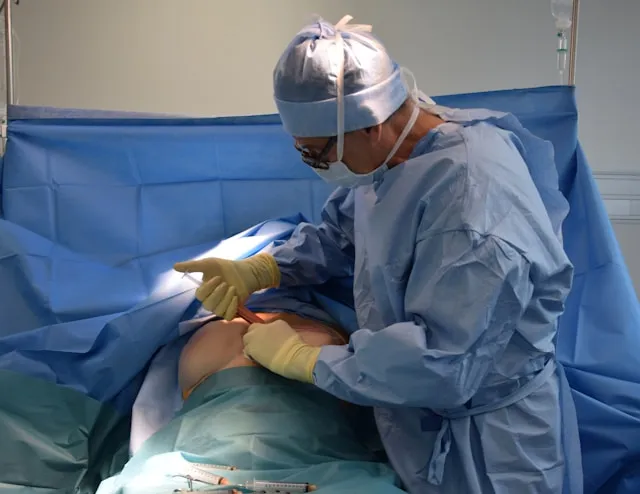
Surgery is an important part of treatment for many people diagnosed with breast cancer. After receiving a diagnosis, patients may be asked to consider different procedures, including wide local excision and mastectomy. They may also have questions about lymph node evaluation, breast reconstruction, surgical risks, and what their choice could mean for future treatment.
These decisions can feel especially difficult because surgery involves more than removing cancer. It can affect physical appearance, sensation, recovery, emotional well-being, and a patient's sense of identity.
The appropriate surgical approach depends on the characteristics of the cancer, the patient's health, and individual preferences. Understanding the available options and the questions to discuss with a surgical team can help patients make decisions with greater confidence.
Why Surgery Is Recommended for Breast Cancer
For many patients with early-stage breast cancer, surgery is used to remove the tumour and assess whether cancer has spread to nearby lymph nodes.
The type of operation depends on several factors, including tumour size, location, the size of the breast, whether there are multiple areas of cancer, and whether the patient can safely receive radiation therapy.
Surgery may be performed before or after other treatments. Some patients undergo an operation first, while others receive chemotherapy or other systemic treatment beforehand to shrink the tumour.
The goal is to develop a treatment sequence that provides effective cancer control while considering the patient's overall health and preferences.
Dr. Aneeqah Din Muhammad, a medical writer at MyBCTeam, explains, “Breast cancer surgery should be understood as one part of a broader treatment plan. The most appropriate procedure depends on the cancer's characteristics, the patient's health, and the treatments that may be needed before or after the operation.”
What Is Wide Local Excision?
Wide local excision, generally known as breast-conserving surgery, removes the cancerous tumour along with a margin of surrounding tissue while preserving most of the breast.
It is an option for many patients with early-stage breast cancer, particularly when the tumour can be removed with clear margins while maintaining an acceptable breast appearance, with or without the need for breast reconstruction.
Radiation therapy is always recommended after a wide local excision, as a part of the breast conservation therapy, to reduce the risk of cancer returning in the breast. There are selected circumstances in which radiation may be omitted, but that decision requires careful clinical assessment, and even opting for a mastectomy instead if radiation therapy is contraindicated.
One advantage of breast-conserving surgery is that it preserves more of the natural breast. However, patients should understand that additional surgery may sometimes be needed if the pathology report shows that cancer cells are present at the edges of the removed tissue.
A wide local excision is not automatically the best option for every patient. Tumour location, disease extent, genetic risk, previous radiation treatment, and other medical considerations may influence whether it is suitable.
What Is a Mastectomy?
A mastectomy involves removing the entire breast. It may be recommended when breast-conserving surgery is not appropriate or when a patient prefers this option after discussing the alternatives.
Reasons a mastectomy may be considered include:
-
A tumour that is too large relative to breast size for an appropriate conservation.
-
Cancer affects multiple areas of the breast.
-
Inability to receive radiation therapy when it is required after breast-conserving surgery.
-
Persistent positive surgical margins despite two or more procedures.
-
Certain inherited genetic risks or a strong personal risk profile.
-
An informed patient preference after discussion of available options.
There are different forms of mastectomy. A simple mastectomy removes breast tissue and usually the nipple and areola. Skin-sparing and nipple-sparing procedures may preserve some of the breast skin or nipple in carefully selected patients.
The appropriate technique depends on the location and extent of the cancer, the condition of the surrounding tissue, and whether reconstruction is planned.
Does One Operation Provide Better Cancer Outcomes?
Patients sometimes assume that removing the entire breast must provide better cancer control than removing only the tumour. However, for appropriately selected patients with early-stage breast cancer, breast-conserving surgery followed by radiation therapy can provide survival outcomes comparable to mastectomy.
The decision is therefore not simply about choosing the most extensive operation. It involves assessing whether each approach is medically appropriate and understanding the additional treatments that may be needed.
Dr. Madhu Prasad, Surgical Oncologist at Far North Surgery, notes, “The decision between lumpectomy and mastectomy should be based on the extent and characteristics of the cancer, the patient's medical circumstances, and her preferences. When more than one approach is appropriate, a careful discussion of the benefits and limitations of each option is essential.”
Patients should ask their surgeon to explain why a particular procedure is being recommended and whether another option could provide an appropriate outcome.
Understanding Lymph Node Surgery
Breast cancer can spread to lymph nodes, particularly those located in the armpit, known as axillary lymph nodes. Evaluating these nodes helps doctors understand the extent of the disease and plan additional treatment.
A common procedure is sentinel lymph node biopsy. The sentinel lymph nodes are the first nodes to which cancer cells are most likely to spread from the breast. During the procedure, surgeons identify and remove selected nodes for examination.
If cancer is found, further treatment decisions depend on the number of affected nodes, the extent of involvement, the type of breast cancer, and other clinical findings.
Some patients may require an axillary lymph node dissection, which removes most of the axillary or armpit lymph nodes. However, this procedure is not necessary for everyone, and modern treatment approaches allow some patients to avoid more extensive lymph node surgery.
One potential complication of lymph node surgery is lymphedema, a condition involving swelling and functional limitation of the arm caused by disruption of lymphatic drainage. Patients should ask about their individual risk and what symptoms to watch for after surgery.
Considering Breast Reconstruction
Some patients who undergo mastectomy choose breast reconstruction. This may be performed at the same time as the mastectomy or at a later date.
Reconstruction options generally include implant-based procedures and autologous flap reconstruction, which uses tissue from another part of the patient's body.
Implant-based reconstruction may involve placing an implant directly or using a temporary tissue expander before a permanent implant is inserted. Autologous reconstruction may use tissue from areas such as the abdomen or back.
Not every patient chooses reconstruction, and it is not medically required for cancer treatment. Some women prefer to use an external breast prosthesis, while others choose to remain without reconstruction.
The decision should take into account medical suitability, recovery expectations, potential complications, personal preferences, and whether additional treatments such as radiation are anticipated.
Patients should have an opportunity to discuss reconstruction before surgery so that the surgical team can coordinate the cancer operation and any reconstructive planning.
What to Discuss Before the Operation
A surgical consultation is an opportunity to understand the proposed procedure and its implications. Patients may feel overwhelmed by information, so preparing questions in advance can be helpful.
Topics to discuss include:
-
Why is this operation recommended for my particular diagnosis?
-
Am I a candidate for breast-conserving surgery?
-
Will I need radiation therapy after surgery?
-
Will lymph nodes need to be removed?
-
What are the potential risks and complications?
-
Could I need another operation?
-
What reconstruction options are available?
-
How might surgery affect sensation and appearance?
-
How will the operation influence other treatments?
Patients may also ask whether their case has been reviewed by a multidisciplinary breast cancer team and whether a second opinion would be useful.
Understanding Surgical Risks and Recovery Expectations
Like all operations, breast cancer surgery carries potential risks. These may include bleeding, infection, fluid accumulation, pain, changes in sensation, scarring, and problems with wound healing.
The extent of recovery varies according to the operation, the patient's general health, and whether reconstruction or lymph node surgery is performed.
Some patients return to many normal activities relatively quickly, while others need more time and rehabilitation support. Temporary restrictions on lifting, driving, or strenuous activity may be necessary.
Patients should follow their surgical team's instructions about wound care, activity, medications, and follow-up appointments. New redness, increasing swelling, fever, worsening pain, or other concerning symptoms should be reported promptly.
Surgery Is One Part of a Larger Treatment Plan
An operation does not always complete breast cancer treatment. Depending on the diagnosis and pathology findings, patients may also need chemotherapy, radiation therapy, hormone therapy, or targeted treatment.
The sequence matters. Some patients receive systemic treatment before surgery, while others begin additional treatment after the operation.
The final pathology report can provide important information about tumour size, margins, lymph node involvement, and other characteristics that influence the next steps.
This is why communication between surgical oncologists, medical oncologists, radiation oncologists, and other members of the care team is essential.
Making a Decision That Reflects Both Medical Needs and Personal Priorities
Choosing a breast cancer operation is a personal decision that should be supported by clear medical information. Some patients prioritize preserving the breast when it is a safe option. Others may prefer mastectomy after considering their diagnosis, risk factors, and personal circumstances.
Neither choice should be treated as a measure of courage or commitment to recovery. The right decision is the one that is medically appropriate and aligns with the patient's informed preferences.
By discussing surgical options, understanding the role of additional treatment, and asking questions about both short-term and long-term considerations, patients can take a more active role in their care.
Breast cancer surgery can be a challenging experience, but a coordinated treatment plan and open communication with the healthcare team can help patients approach it with greater clarity and confidence.

लेखक