Nearly everyone develops cataracts with age. The National Eye Institute counted 24.4 million U.S. cases in 2010 and expects almost 50 million by 2050, warning that “by age 80, almost everyone will have some form of cataract.”
Fortunately, cataract surgery is one of medicine’s safest, fastest-evolving procedures—a big deal here in sunny Lee County, where sharp vision powers boating, golf, and daily driving. In this guide, we’ll profile Fort Myers surgeons, decode real costs, compare premium lenses, and outline recovery.
Need a step-by-step look at the operation? Snead Eye Group’s step-by-step walk-through covers every stage of the operation. Ready? Let’s bring crisp, glare-free vision back into view.
How we ranked cataract surgeons in Fort Myers
We scored every clinic on five weighted factors: expertise 30 percent, technology 25 percent, lens choice 20 percent, cost transparency 15 percent, and patient experience 10 percent.
Choosing an eye surgeon deserves the same diligence you’d use for a heart specialist, so we built the scoring model before writing a single recommendation.
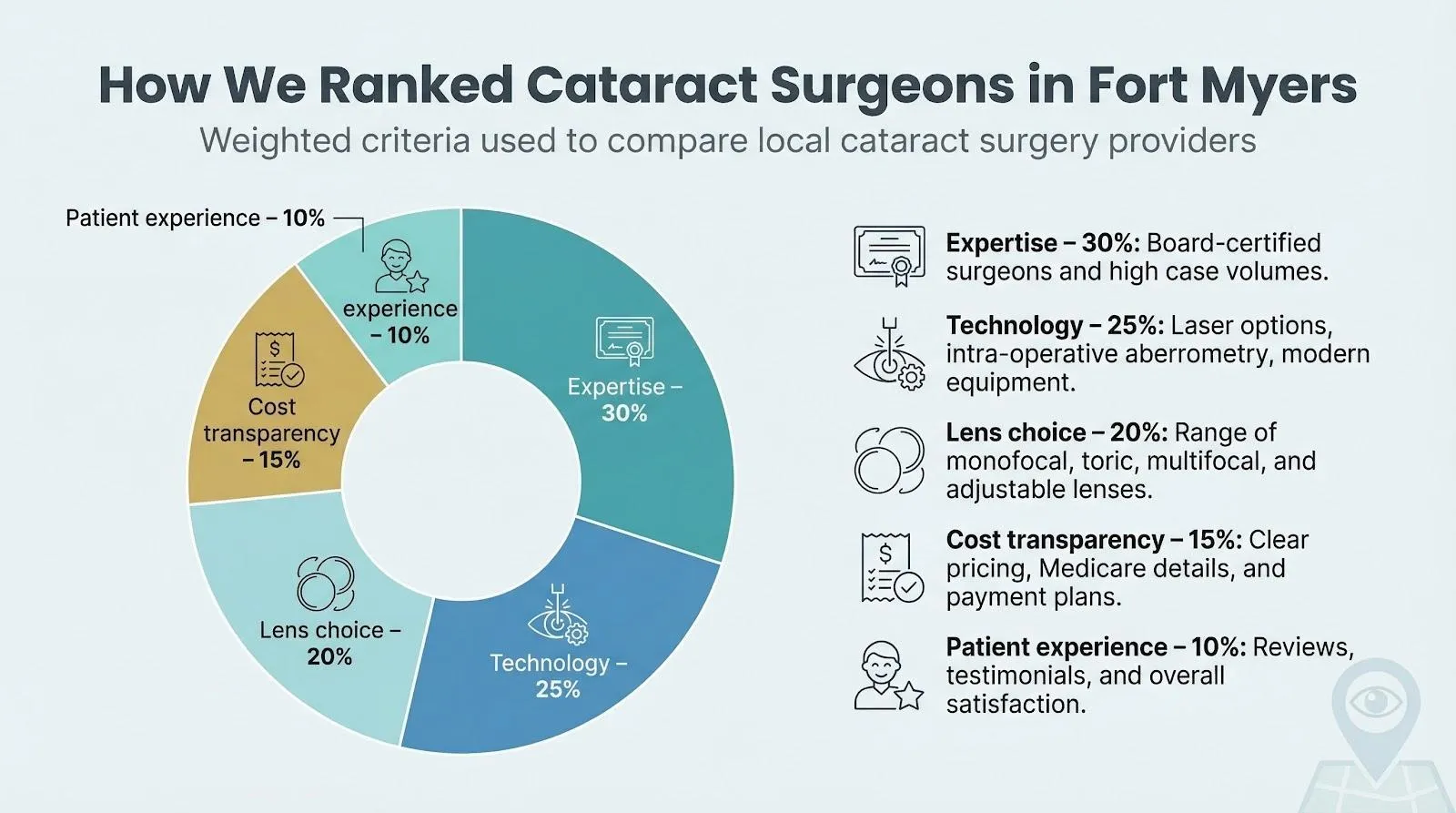
First, surgical expertise. Board certification and a large case log matter most because outcomes improve with volume.
Second, technology. According to Gitnux statistics, ultrasound phacoemulsification still powers about 95 percent of cataract surgeries in developed nations, and practices that add a femtosecond laser suite, intra-operative aberrometry, or Light Adjustable Lenses earn extra points for precision and flexibility.
Third, lens portfolio. The wider the menu—toric, multifocal, trifocal, adjustable—the easier it is to match vision to your lifestyle.
Fourth, cost clarity. Medicare covers the core procedure, but premium upgrades can add thousands; clinics that post ranges and offer payment plans scored higher.
Finally, patient experience. Verified reviews, local awards, and detailed testimonials break ties when clinical specs look similar.
Only Fort Myers-area providers with at least one board-certified ophthalmologist and public details on services made our list.
1. Snead Eye Group: precision craftsmanship meets custom vision
Snead Eye Group tops our list because it masters the fundamentals, then layers on choice. Its website even breaks down every surgical step—from the painless topical anesthetic to the self-sealing micro-incision that lets most patients resume daily routines within a day—so you can learn more about the procedure before you ever sit in the exam chair.
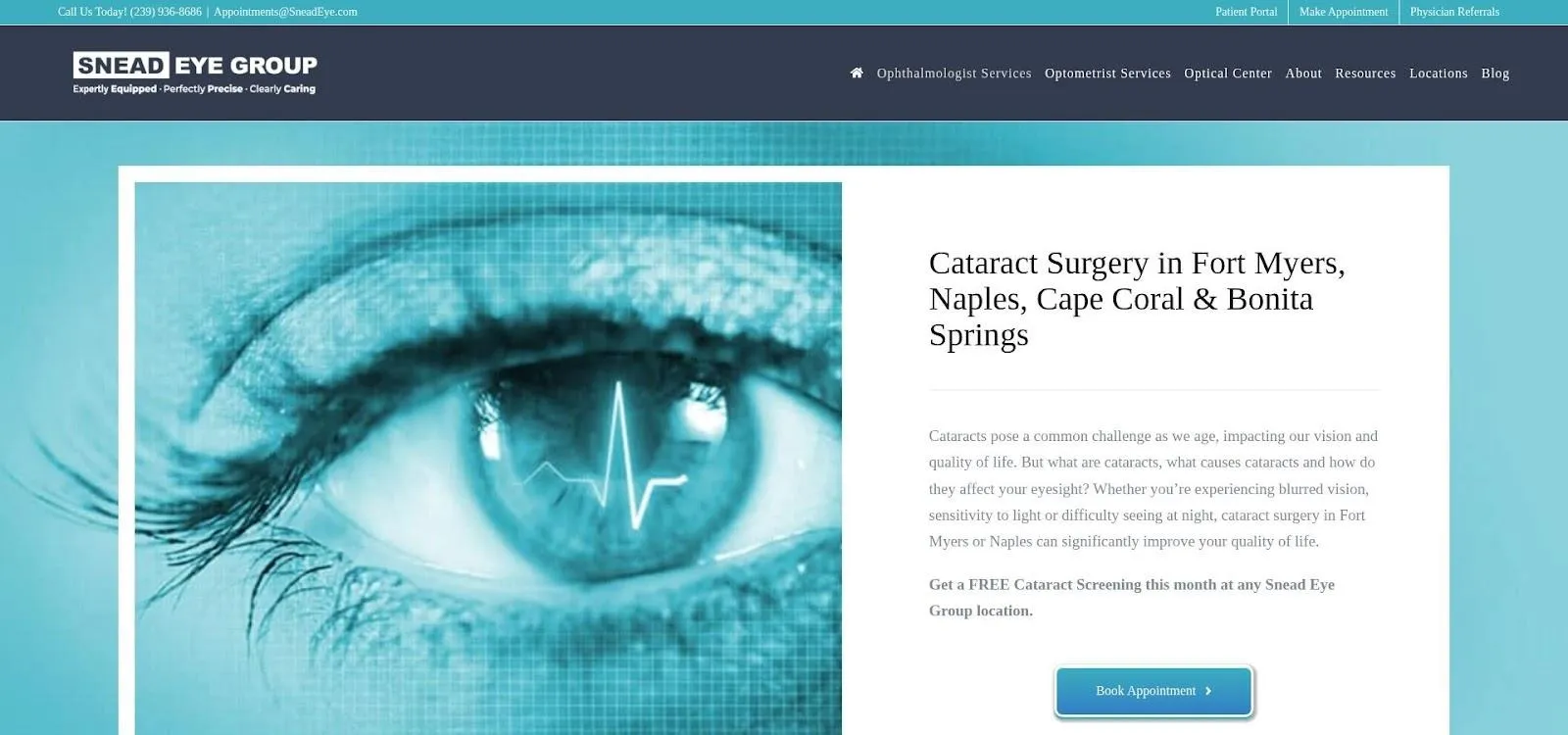
Image: Snead Eye Group cataract surgery page screenshot
Dr. Brad Snead and Dr. John Snead are board-certified ophthalmologists who still perform traditional phacoemulsification by hand. The method powers most cataract surgeries worldwide and remains the gold standard for safety and speed. Their high case volume keeps skills sharp, and patients often return to the tennis court or tie tiny fishing knots within days.
Lens flexibility sets Snead apart. In addition to multifocal and toric implants, the team offers the FDA-approved Light Adjustable Lens, which lets the surgeon fine-tune your prescription after the eye heals. For anyone chasing glasses-free vision across all distances, that post-op adjustment can be a game-changer.
Costs are clear. Medicare covers the core procedure, while premium lenses or LASIK touch-ups add several thousand dollars per eye. Snead eases the hit with CareCredit financing and a free cataract screening, so you know the numbers before you decide.
Warm bedside manners, two convenient offices, and plain-English explanations make Snead Eye Group the benchmark to beat.
2. The Eye Associates: big-team capacity, boutique-level choice
If you like the confidence of a large surgical team, The Eye Associates fit the bill. The group fields multiple board-certified ophthalmologists who have completed more than 100,000 cataract procedures, so someone on staff has seen every lens power, pupil shape, and corneal quirk imaginable.
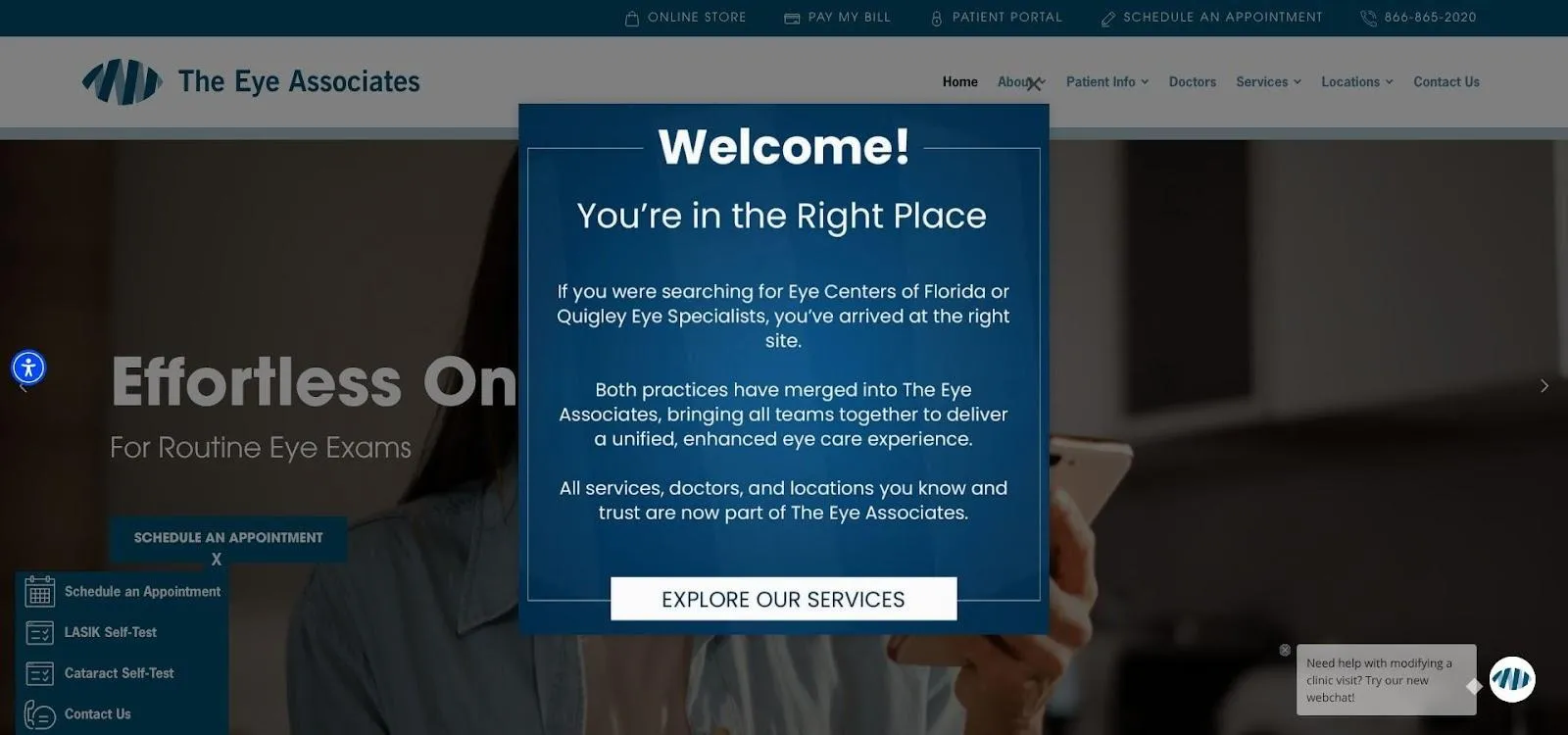
Image: The Eye Associates cataract surgery practice website screenshot
Technology takes center stage. Along with tried-and-true phaco, surgeons can call on a femtosecond laser for bladeless incisions and ORA real-time aberrometry that fine-tunes lens power while you’re still on the table. Premium IOLs abound—think J&J Synergy multifocal or Symfony extended-depth lenses for sharp vision across distances.
Cost clarity is solid. Medicare covers the surgeon, facility, and a basic monofocal lens. Elective upgrades, whether laser guidance or a high-end implant, add about two to four thousand dollars per eye. The practice lightens the load with zero-interest plans that stretch up to two years.
With offices from Fort Myers to Naples, scheduling is flexible, yet patients still mention staff who walk them through lens pros and cons like a favorite teacher, not a salesperson. The Eye Associates combine the muscle of a mini hospital with the menu of a premium boutique, earning our second spot.
3. Elmquist Eye Group: laser precision with a personal touch
Elmquist Eye Group shows that advanced tech and small-practice warmth can coexist.
Dr. Yasaira Rodriguez leads the Fort Myers surgical team and is known for meticulous pre-op testing: topography, OCT scans, even tear-film analysis map every micron of your eye before a scalpel moves. On surgery day, the FDA-approved LenSx femtosecond laser creates the incisions and fragments the lens with computer-guided accuracy, while Dr. Rodriguez completes the rest by hand.
Lens choice is broad yet curated. Elmquist offers toric implants for astigmatism, multifocals for all-distance clarity, and will arrange a Light Adjustable Lens referral if you want post-op fine-tuning. Because surgeons explain trade-offs in plain English, you leave knowing exactly how each upgrade affects glare, halos, and your budget.
Pricing is straightforward. Medicare covers the core operation; premium lenses and laser guidance usually add two to three thousand dollars per eye. Staff walk you through financing or health-savings options, so the numbers never feel mysterious.
Atmosphere seals Elmquist’s third-place finish. Patients say they feel “like family,” and follow-up calls come directly from the surgical team, not a call center. With two clinic locations and flexible scheduling, Elmquist is the pick for anyone who values cutting-edge optics and genuine human care.
4. Griffin Eye Center: award-winning skill and niche high-tech tools
Griffin Eye Center feels like a designer workshop—small, specialized, and stocked with gear most clinics skip.
Dr. Neil Griffin has appeared on “America’s Best Physicians” lists for cataract and corneal surgery for five straight years, thanks to both technique and bedside charm. He favors Zepto, a disposable precision capsulotomy device that creates a perfectly round opening in a fraction of a second, then finishes with traditional phaco for speed.
Lens options cover every need. You’ll find multifocal and toric implants for routine cases and the Light Adjustable Lens if your prescription keeps shifting.
The website leans on clinical detail rather than flash, so financing info appears during your consult. Medicare pays for the core package, while premium upgrades usually add two to four thousand dollars per eye.
Patients praise the calm, boutique vibe: fewer white coats racing around, more one-on-one time to discuss hobbies, screen habits, and even favorite reading lights. If you want a nationally recognized surgeon wielding niche tech in a low-traffic setting, Griffin Eye Center delivers.
5. Frantz EyeCare: the region’s laser pioneer
Dr. Jonathan Frantz is the name Southwest Florida pairs with surgical firsts. He introduced the area’s first fully bladeless LenSx cataract procedure more than a decade ago and has since completed over 75,000 cataract cases, a record few surgeons can match.

Image: Frantz EyeCare LenSx laser cataract surgery page screenshot
That head start shows in his in-house cataract-refractive suite. LenSx creates the incisions, the VERION digital tracker locks your eye’s alignment, and ORA aberrometry confirms lens power before you leave the table. Think GPS, cruise control, and lanes keep working together for your vision.
Lens choice stays just as advanced. Frantz offers trifocal PanOptix for all-distance clarity, Vivity for extended range with fewer halos, and the Light Adjustable Lens for post-op fine-tuning. Each upgrade lists a clear price, and counselors explain whether the extra three to four thousand dollars per eye is worth the glasses' freedom.
Patients love the efficiency of a large practice with seven clinics and a dedicated surgery center. They also mention staff who remember their grandkids’ names at follow-up. If you want a surgeon who sets local benchmarks and runs the most integrated tech stack in town, Frantz EyeCare is your pick.
6. Southwest Florida Eye Care: laser focused, locally rooted
Southwest Florida Eye Care closes our list with a focused offer: laser cataract surgery paired with a single-price Advanced Vision package that bundles a premium lens and astigmatism correction. Dr. Albert Smolyar and team rely on femtosecond technology to automate the delicate steps, aiming for fast recovery and minimal chair time.
Public pricing is limited, but coordinators confirm a Medicare foundation and an upgrade cost similar to peers, about 4,000 dollars per eye. What the practice lacks in online flash it matches with approachability; staff schedule surgeries quickly and emphasize an honest patient–doctor relationship.
If you want sleek marketing pages, this may not be the place. If you value straightforward laser surgery from a neighborhood team that treats you like a regular, Southwest Florida Eye Care delivers.
Cataract surgery options at a glance
We just covered plenty of detail, so here’s a side-by-side snapshot. Compare how each clinic removes the cloudy lens, which premium implants sit on the menu, the usual out-of-pocket after Medicare, and whether you can spread payments over time. Bring this chart to your consultation so the surgeon can match technology to your lifestyle and budget.
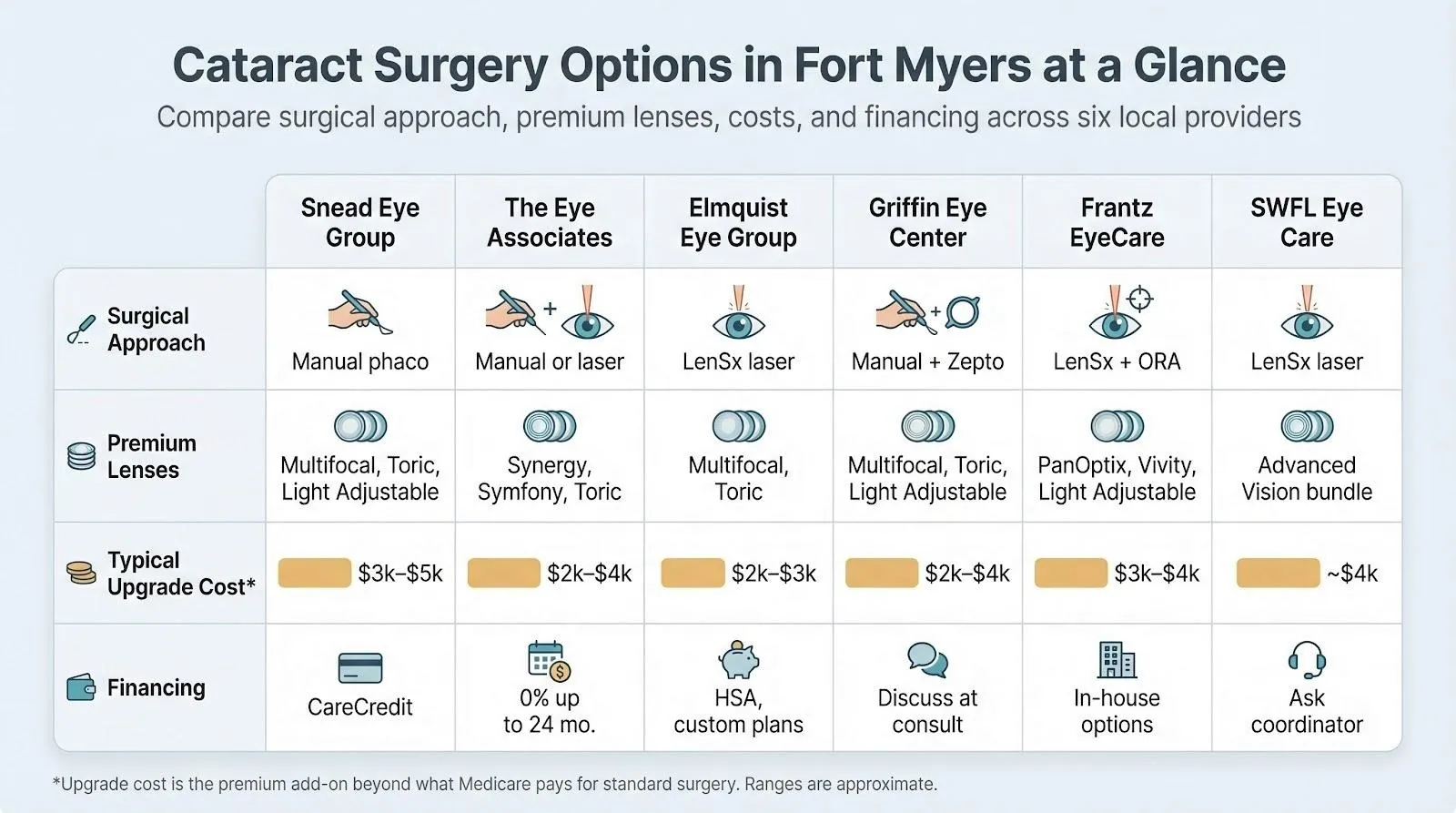
Provider | Surgical approach | Premium lenses | Medicare coverage | Typical upgrade cost* | Financing |
Snead Eye Group | Manual phaco | Multifocal, toric, Light Adjustable Lens | Core package | $3,000–$5,000 per eye | CareCredit |
The Eye Associates | Manual or femtosecond laser | Synergy, Symfony, toric | Core package | $2,000–$4,000 per eye | Zero-interest up to 24 months |
Elmquist Eye Group | LenSx laser | Multifocal, toric | Core package | $2,000–$3,000 per eye | HSA, custom plans |
Griffin Eye Center | Manual with Zepto assist | Multifocal, toric, Light Adjustable Lens | Core package | $2,000–$4,000 per eye | Discuss at consult |
Frantz EyeCare | LenSx laser plus ORA | PanOptix, Vivity, Light Adjustable Lens | Core package | $3,000–$4,000 per eye | In-house options |
SWFL Eye Care | LenSx laser | Advanced Vision bundle | Core package | About $4,000 per eye | Ask coordinator |
*Upgrade cost is the premium add-on beyond what Medicare pays for standard surgery. Exact pricing depends on lens power and extras like LASIK touch-ups.
Cataract FAQs – what patients ask every week
Is the surgery covered by insurance?
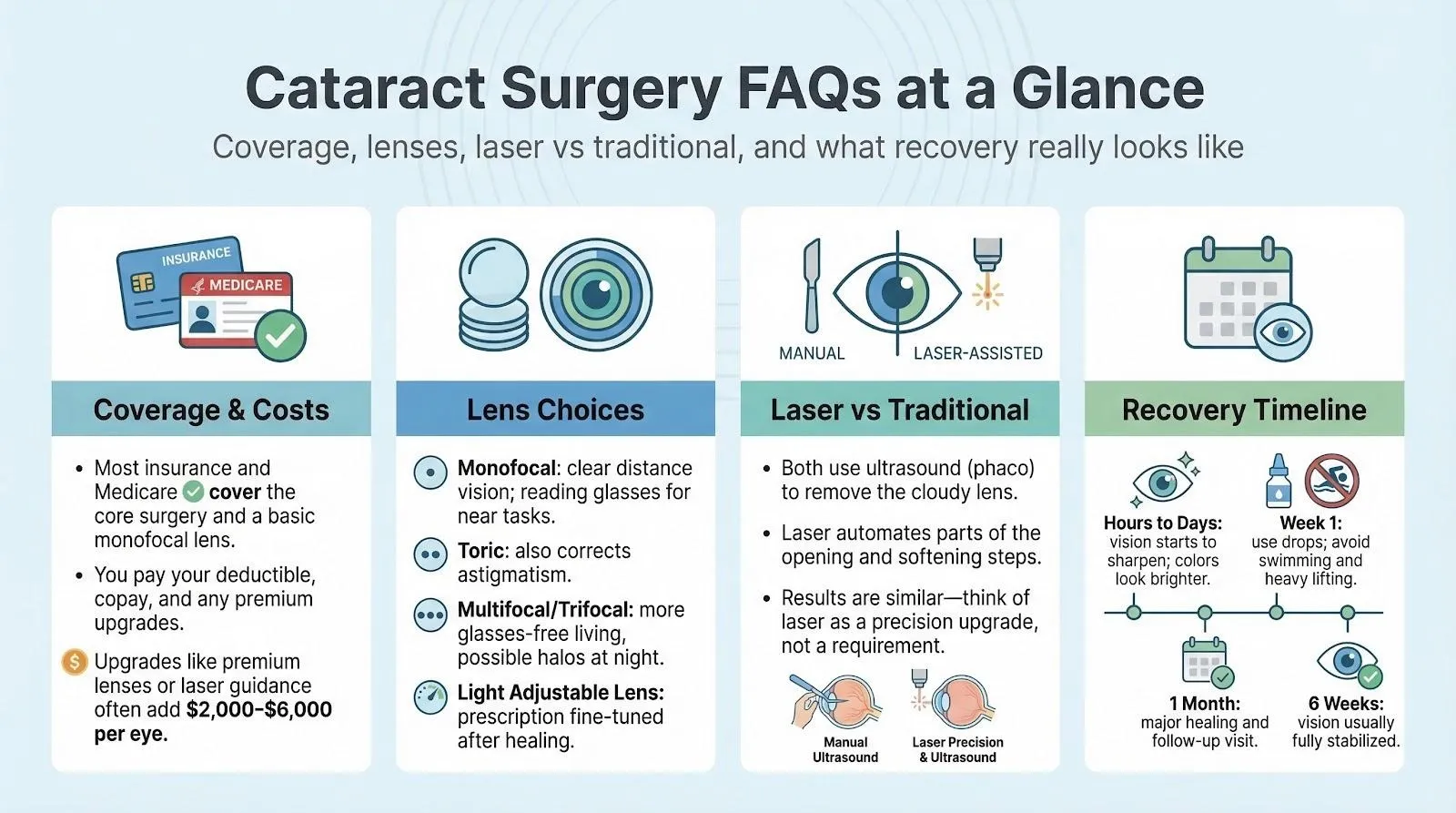
Yes. Medicare and most private plans pay the surgeon, facility, anesthesia, and a basic monofocal lens. You cover only your deductible and copay. Premium lenses or laser guidance add about $2,000 to $6,000 per eye, depending on clinic and implant.
How long until I see clearly?
Most people notice sharper vision within hours. Colors look brighter, and depth perception can feel different for a day or two. Many patients drive safely after 24 hours once cleared by the doctor, but skip swimming and heavy lifting for the first week so the incision seals.
Laser versus traditional—does it matter?
Both rely on ultrasound phacoemulsification to remove the cloudy lens. The femtosecond laser simply automates the opening and softening steps. Studies show outcomes are nearly identical; in fact, manual phaco still handles about ninety-five percent of cataract cases in developed nations. Think of lasers as a precision upgrade rather than a medical necessity.
Which lens should I choose?
A monofocal lens gives high-definition distance vision, and you’ll use readers for near tasks. A toric lens also corrects astigmatism. Multifocal and trifocal lenses aim for glasses-free living across all distances but can create halos around lights at night. The Light Adjustable Lens, cleared by the FDA, lets your surgeon fine-tune the prescription weeks after surgery. Match the lens to your habits: golfing, night driving, or crossword marathons.
What does recovery look like?
Plan on prescription eye drops for three weeks to prevent infection and calm inflammation. Your surgeon will check your eye at one day, one week, and one month. Vision usually stabilizes by six weeks, but you can resume most routines within a couple of days.
Still have questions? Write them down and bring the list to your consultation. Feeling prepared speeds recovery more than any medicine.
Conclusion
Cataract surgery in Fort Myers offers a range of technologies, lens options, and price points to fit nearly every lifestyle. Use the rankings, comparison chart, and FAQs above as a roadmap, then schedule consultations with two or three surgeons to find the perfect match for your eyes—and your budget.

Reviewed by