It is easy to dismiss exhaustion after having a baby. Broken sleep, physical healing, feeding demands, and new routines are exhausting enough. But persistent fatigue, dizziness, or breathlessness are not symptoms you should automatically chalk up to motherhood. Sometimes iron deficiency, including postpartum iron-deficiency anemia, is part of the picture.
Iron needs rise during pregnancy, and blood lost during delivery can further reduce iron reserves. The question is not simply which iron supplement is best. It is whether your symptoms need testing, what food can realistically contribute, and when medical treatment offers more than a diet change. Here is a practical guide to navigating those decisions without unnecessary pills or one-size-fits-all rules.
What Is Postpartum Iron Deficiency?
Iron helps the body make hemoglobin, the protein that carries oxygen in red blood cells. During pregnancy, the body builds additional blood volume and supports a developing baby, making iron especially important. After delivery, some women have reduced iron stores, particularly if they entered labor with low iron or experienced substantial blood loss.
Iron deficiency and iron-deficiency anemia are related, but they are not identical. Iron stores can become depleted while hemoglobin is still in the normal range. Anemia develops when the shortage becomes severe enough to reduce the amount of hemoglobin in the blood. Credihealth also explains the general stages of iron deficiency; the postpartum issue adds the effects of recent pregnancy, delivery, and recovery.
The distinction matters because fatigue alone cannot tell you whether you need iron treatment. Your medical history and appropriately timed blood tests provide a much more reliable answer.
Why Might Iron Levels Drop After Childbirth?
Some women begin pregnancy with limited iron reserves because of heavy menstrual periods, low iron intake, or difficulties absorbing iron. Pregnancy increases demand, and delivery can add another challenge through blood loss. A prolonged recovery, reduced appetite, or difficulty preparing meals may make it harder to replenish nutrients afterward.
Risk is not identical for everyone. A mother with heavy bleeding at birth may need earlier assessment than someone who had an uncomplicated delivery and feels well. Iron can also be low for reasons unrelated to pregnancy, including digestive conditions or other sources of bleeding. This is why a clinician should consider the wider picture rather than assuming every postpartum symptom is nutritional.
Signs of Low Iron After Giving Birth
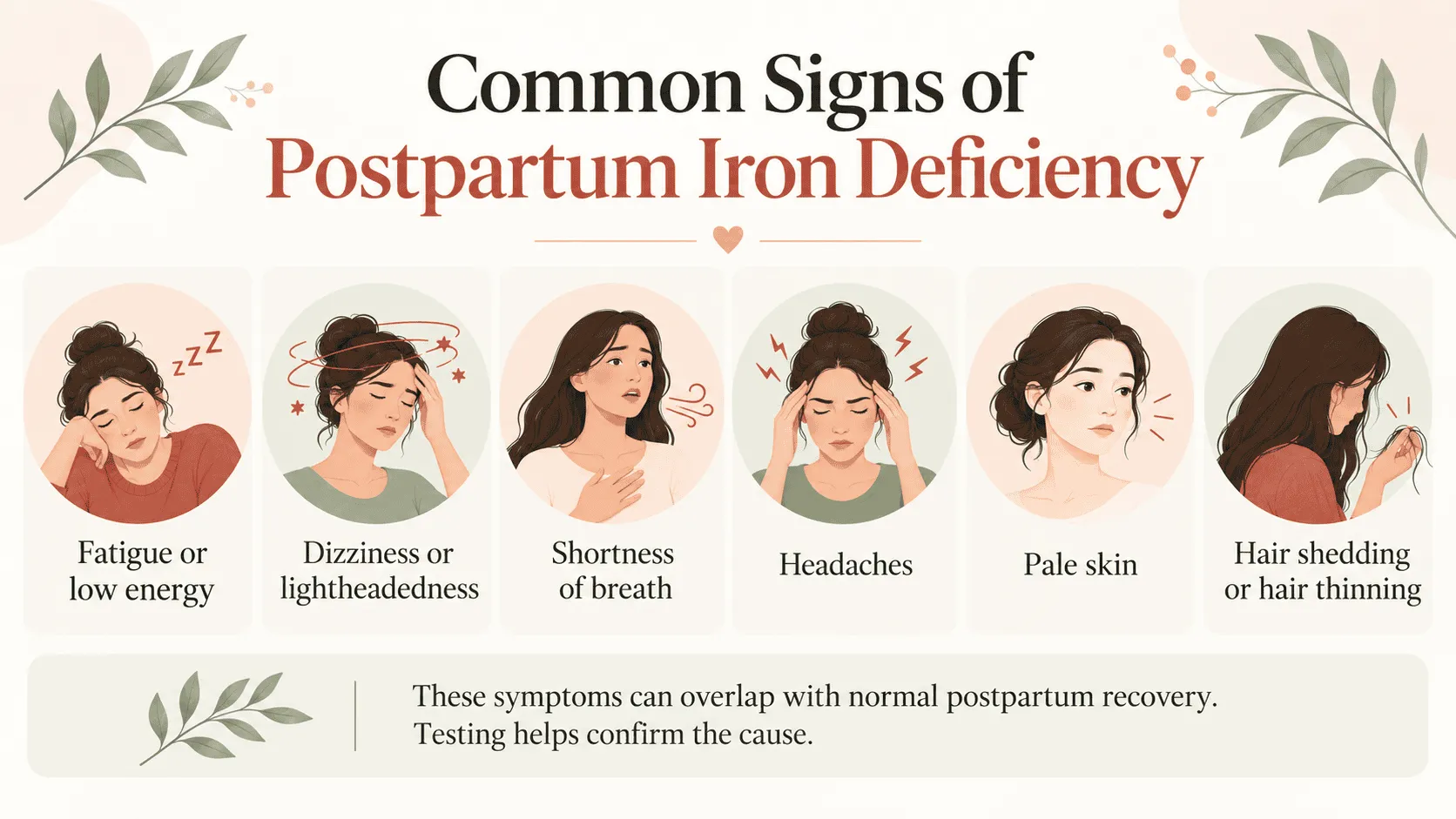
Possible symptoms include unusual fatigue, weakness, dizziness, headaches, pallor, reduced stamina, a racing heartbeat, and feeling short of breath with ordinary activity. Some mothers describe difficulty concentrating. These symptoms can overlap with sleep loss, thyroid conditions, infection, low mood, and other postpartum health problems, so a symptom checklist is not a diagnosis.
Pay attention to the pattern: are you struggling to recover after routine activities, becoming lightheaded when standing, or finding it hard to manage tasks that previously felt manageable? Discuss persistent or worsening symptoms with your healthcare professional. Heavy ongoing bleeding, fainting, chest pain, or shortness of breath at rest need urgent medical assessment. Do not attempt to manage those symptoms with food or over-the-counter iron alone.
How Doctors Check Iron Levels After Delivery
A complete blood count (CBC), including hemoglobin, is often the starting point when blood loss or symptoms raise concern. Clinicians may also consider ferritin testing, which helps assess the body's stored iron, and other iron studies when the diagnosis is unclear. Tests need interpretation alongside bleeding history, symptoms, inflammation, and previous results.
complete blood count (CBC), including hemoglobin, is often the starting point when blood loss or symptoms raise concern. Clinicians may also consider ferritin, which reflects iron stores, and other iron studies when the diagnosis is unclear. Tests need interpretation alongside bleeding history, symptoms, inflammation, and previous results.
There is a specific postpartum wrinkle: ferritin may rise in response to inflammation around childbirth and can look deceptively reassuring soon after delivery. A 2025 clinical review recommends caution about measuring ferritin within the first six postpartum weeks, while noting that women with significant delivery-related bleeding should have hemoglobin assessed. Your clinician will decide when follow-up testing is useful; a single result should not be interpreted in isolation.
If iron deficiency is confirmed, follow-up testing helps establish whether treatment is working and whether the body is rebuilding its iron stores. Persistently abnormal results may require looking for another cause.
Best Iron-Rich Foods for Postpartum Recovery
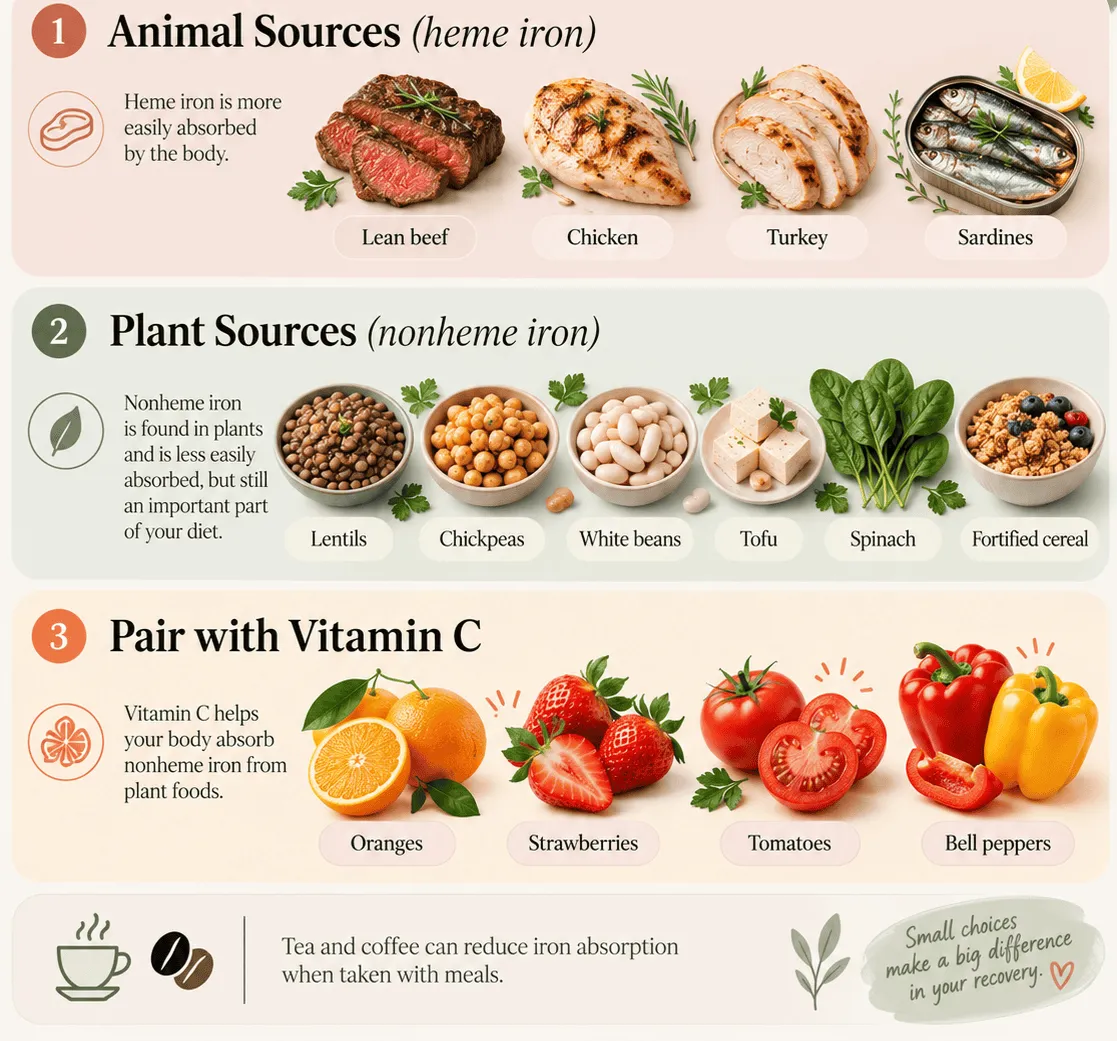
An iron-rich diet is an important foundation, whether or not you also need a supplement. The two main dietary forms are heme iron, found in animal foods, and nonheme iron, found in plant foods and fortified products. Heme iron is generally absorbed more readily, but a thoughtfully planned plant-based diet can contribute substantial iron, too.
Include Iron-Rich Animal and Plant-Based Foods
Cooked lean beef, poultry, seafood, lentils, chickpeas, kidney beans, tofu, and iron-fortified cereals are practical options. According to the NIH Office of Dietary Supplements, a half-cup of cooked lentils provides about 3 mg of iron, while a cup of canned white beans provides about 8 mg. Check fortified cereal labels because amounts vary greatly between brands.
For a realistic postpartum meal, try lentil-and-vegetable soup, a chickpea curry with rice, a tofu stir-fry, or a beef-and-bean bowl. Frozen vegetables and canned beans are valid shortcuts. Iron-rich postpartum meals do not need complicated recipes to be nutritious.
How to Improve Iron Absorption from Plant-Based Foods
Pair nonheme iron with vitamin C-rich foods: lentils with tomatoes, beans with bell peppers, or fortified cereal with fruit. Tea and coffee can reduce iron absorption when consumed with an iron-rich meal, although there is no need to ban them entirely. If you take prescribed iron tablets, ask a pharmacist how to time them around drinks, calcium supplements, and medicines.
Food choices matter, but food alone may not correct significant anemia quickly enough. Dietary changes and medical iron treatment serve different purposes, and the right approach depends on the severity and cause of deficiency.
When Do Iron Supplements Help Postpartum?
Iron supplements are commonly used when testing identifies iron deficiency or iron-deficiency anemia, or when a clinician considers a woman at meaningful risk. Different oral preparations, such as ferrous sulfate, ferrous fumarate, and ferrous gluconate, contain different amounts of elemental iron. That is one reason not to choose a dose by comparing tablet sizes or social-media recommendations.
WHO says oral iron, with or without folic acid, may be offered for 6 to 12 weeks after birth in settings where anemia during pregnancy is a public-health concern. This is a conditional population-level recommendation, not proof that every postpartum woman should take iron for the same duration. A confirmed deficiency or anemia may require a different treatment plan and longer follow-up.
Common effects of oral iron include constipation, nausea, abdominal discomfort, and darker stools. A pharmacist or clinician may recommend adjusting the formulation, timing, or schedule if side effects make treatment difficult. Iron can also interact with other medicines, so disclose everything you take. Store iron supplements securely out of children’s reach: accidental overdose can be dangerous.
What If You Are Breastfeeding?
Breastfeeding does not automatically rule out iron treatment. The NHS says ferrous sulfate can usually be taken while breastfeeding. A mother’s iron supplements do not meaningfully increase the iron passed to her baby through breast milk, so they are not a treatment for an infant who has low iron. Your own dosing still depends on your medical needs, rather than the assumption that breastfeeding always means taking extra iron.
The U.S. dietary reference for iron during lactation is not the same as a prescription for treating deficiency. A clinician can help distinguish everyday nutritional requirements from the amount needed to replace depleted iron stores.
Can Iron Supplements Stop Postpartum Hair Loss?
This is a common question, but the answer depends on the cause of shedding. The American Academy of Dermatology explains that many new mothers experience temporary excessive shedding, called telogen effluvium, after estrogen levels fall following childbirth. It often becomes noticeable a few months after birth and usually improves as the body readjusts.
Low iron can coexist with hair shedding, but that does not mean routine postpartum shedding is caused by iron deficiency. Taking iron supplements without evidence of deficiency is not a reliable hair-growth strategy. As Credihealth explains in its guide to hair loss causes and warning signs, hormonal changes, nutritional deficiencies, and thyroid problems can contribute to hair loss through different mechanisms. If shedding is unusually severe, patchy, prolonged, or accompanied by fatigue, dizziness, or other symptoms, ask about an evaluation.
Oral Iron vs. Iron Infusions: When Is IV Treatment Considered?
Oral iron is commonly used for mild to moderate postpartum anemia. Intravenous (IV) iron may be considered when anemia is more severe, oral treatment causes unacceptable side effects, absorption is poor, or a clinician determines that a faster response is needed. An iron infusion is a medical treatment delivered under supervision, not a stronger version of a wellness supplement.
A 2024 Cochrane review evaluated 33 randomized studies involving 4,558 postpartum women. Compared with oral tablets, IV iron probably reduced fatigue slightly during the first 8 to 28 days, but there was probably little or no difference after four weeks. Constipation was more common with oral iron. The researchers also emphasized uncertainty around several important outcomes, including breastfeeding and rare serious reactions.
These findings are useful for discussing options, not choosing treatment independently. A clinician will weigh blood results, symptoms, bleeding, tolerance, and the risks and benefits of each approach. Severe or unstable bleeding may require a different urgent treatment pathway.
A Practical Postpartum Iron Recovery Plan
Start with the care plan already in place. If you had substantial blood loss, known anemia during pregnancy, or persistent symptoms, ask whether follow-up blood work is needed. Take prescribed iron as directed and tell your clinician if you cannot tolerate it. Make a note of ongoing symptoms so you can discuss changes rather than relying only on how tired you feel that day.
Next, reduce the daily friction around food. Keep fortified breakfast options, cooked lentils or beans, frozen vegetables, and vitamin C-rich fruit accessible. Ask friends or family to help with meals, not just baby supplies. If dietary restrictions, poor appetite, or the demands of breastfeeding make eating consistently difficult, a postpartum nutritionist can help turn medical guidance into an achievable meal plan, alongside care from your obstetric or primary-care team.
Finally, allow recovery to be gradual. Better meals can improve nutrient intake, but they are not a substitute for testing or prescribed treatment when anemia is present. The goal is to restore iron status safely, not to chase a perfect diet while caring for a newborn.
The Bottom Line
Postpartum iron deficiency deserves attention because its symptoms can be mistaken for ordinary exhaustion after childbirth. Iron-rich foods help support recovery, while supplements and infusions have specific roles when deficiency or anemia is diagnosed. Rather than guessing from fatigue or hair shedding alone, use symptoms, your birth history, and appropriately timed testing to guide the next step. A realistic nutrition plan and the right medical follow-up can work together to support recovery.
Written By:
Samantha Gilbert, FNC, CHNP
Disclaimer: This article provides general information and is not a substitute for individualized medical evaluation or treatment.
Frequently Asked Questions
Should I take iron after childbirth if my blood count is normal?
Not automatically. Normal hemoglobin does not always rule out depleted iron stores, but supplements should be guided by symptoms, risk factors, and an appropriate evaluation rather than taken just in case.
How long should I take iron supplements postpartum?
The duration depends on whether the goal is prevention or treatment, how low iron stores are, and how blood tests respond. WHO’s 6–12-week guidance applies to particular public health settings; diagnosed anemia may require a different course.
How much iron should I take after delivery?
There is no single dose that is right for every postpartum woman. Formulations contain different amounts of elemental iron, and treatment doses differ from routine dietary requirements. Ask your clinician or pharmacist rather than prescribing your own dose.
What are easy iron-rich foods for breastfeeding mothers?
Try lentils with tomatoes, beans and rice with peppers, tofu with vegetables, or cooked lean meat with potatoes. Iron-fortified cereal with vitamin C-rich fruit is another convenient choice. Include enough total food to meet your breastfeeding needs.
Do iron supplements help postpartum hair loss?
Only if iron deficiency is relevant to the hair-loss problem and a clinician recommends treatment. Most typical postpartum shedding results from temporary hormonal changes and gradually resolves without iron tablets.
Is ferrous sulfate safe while breastfeeding?
It can usually be taken while breastfeeding, according to NHS guidance. However, the mother’s supplement does not treat iron deficiency in the baby, and individualized medical advice still matters.
When might I need an iron infusion postpartum?
A clinician may consider IV iron for more severe anemia, poor tolerance of tablets, poor absorption, or situations requiring faster correction. An infusion is not a substitute for identifying the cause of anemia.
Why might ferritin testing be delayed after childbirth?
Inflammation following delivery can temporarily increase ferritin, potentially obscuring low iron stores. Depending on symptoms and bleeding history, clinicians may check hemoglobin early and choose a later time for ferritin testing.

Reviewed by