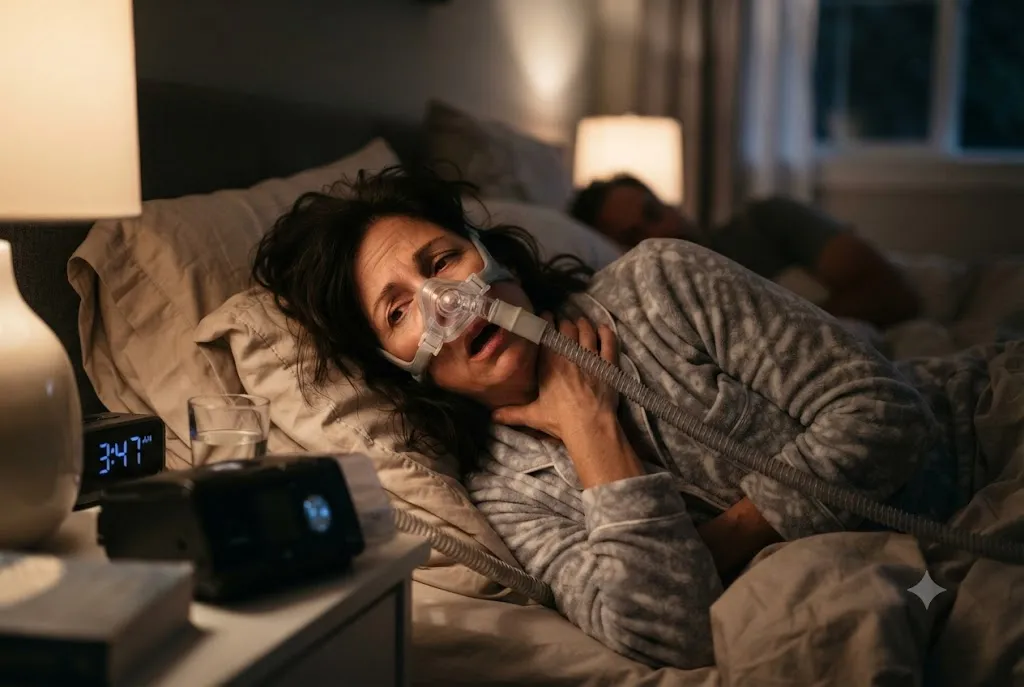
For many women, the first real sign that something has changed isn’t a hot flash or a missed period. It’s the 3 a.m. wake-up. They fall asleep without difficulty, then surface in the dark hours of the morning, wide awake, mind racing, sometimes drenched in sweat. They lie there watching the clock, dreading the day ahead, and wondering why a skill they’ve had their whole lives has suddenly stopped working.
Sleep disruption is among the most common and most disabling symptoms of the menopausal transition, yet it is rarely the one women expect. It rarely gets the attention given to hot flashes, and it is often explained away as stress, ageing, or a busy life. In reality, several things can be happening at once, and understanding them is the first step toward getting a full night’s rest back.
Why Sleep Changes in Perimenopause
Sleep is regulated by a delicate interplay of hormones and brain signals, and the hormones that fluctuate during perimenopause are part of that system. Progesterone has a mild calming, sleep-promoting effect, and estrogen helps regulate body temperature and supports the quality of sleep. When both begin to rise and fall unpredictably, sleep becomes lighter, more fragmented, and easier to disrupt.
Temperature plays a particularly important role. The body naturally cools as it prepares for sleep, and the brain’s thermostat becomes more sensitive during the transition. Even a small spike in body temperature can trigger a night sweat that pulls a woman out of sleep. Once awake, she may struggle to settle again, especially if anxiety creeps in during the quiet hours.
It Isn’t Always Hormones Alone
One of the more helpful things to understand is that perimenopausal sleep problems usually have more than one cause. Sleep patterns change with age in both women and men, and insomnia is a common complaint in middle age regardless of hormones. Stress, caring responsibilities, and demanding jobs often peak at exactly the same time.
“It’s tempting to blame everything on hormones, and they’re often a major factor, but they’re rarely the whole story,” says Dr. Sundus Amena. “Sleep cycles shift with age, stress is usually high in this decade of life, and conditions like sleep apnoea become more common in middle age. When I assess someone who isn’t sleeping, I want to know which of these pieces are in play, because the right treatment depends on it. A woman whose sleep is being wrecked by night sweats needs a different plan from one whose sleep is being broken by undiagnosed apnoea.”
The Hidden Cost of Poor Sleep
Lost sleep rarely stays confined to the night. After weeks of broken rest, many women notice that their concentration slips, their memory feels unreliable, and their patience wears thin. Small frustrations feel larger, and tasks that were once routine feel exhausting. Because many of these effects look like the “brain fog” and mood changes of perimenopause itself, it can be hard to tell where one problem ends and the other begins.
In fact, the two feed each other. Poor sleep worsens mood and anxiety, and heightened anxiety makes it harder to fall or stay asleep. The cycle can become self-reinforcing, so that by the time a woman seeks help she may be dealing with exhaustion, low mood, and a growing fear of bedtime all at once. Breaking that cycle often requires addressing sleep directly rather than simply waiting for the transition to pass, which for some women can take years.
Common Triggers Worth Looking At
Some women find that specific habits make night waking worse. Alcohol is a frequent culprit: it may help a person fall asleep, but it tends to fragment sleep later in the night and can intensify hot flashes. Caffeine late in the day, heavy or spicy evening meals, a warm bedroom, and heavy bedding can also contribute. Screens close to bedtime keep the brain alert when it should be winding down.
None of these is a cause in isolation, but together they can tip a fragile sleep pattern into a broken one. Adjusting them is free, low-risk, and sometimes surprisingly effective, which makes them a sensible first step before reaching for medication.
What Actually Helps
The most effective approach is usually a combination. For women whose sleep is disrupted mainly by hot flashes and night sweats, treating those symptoms can restore sleep as a welcome side effect. Hormone therapy is one option for relieving them, though it carries risks and isn’t right for everyone, so it should be discussed individually. Some non-hormonal medicines also reduce hot flashes and may help.
For persistent insomnia, cognitive behavioural therapy for insomnia is considered one of the most effective treatments available, and its benefits tend to last longer than those of sleeping tablets. It helps retrain the brain’s association between bed and wakefulness and tackles the worry that so often keeps women awake. Practical habits support all of this: keeping a consistent bedtime and wake time, keeping the bedroom cool and dark, using breathable bedding and nightwear, and getting daylight and regular physical activity during the day.
What to Do When You’re Awake at 3 a.m.
If you wake and can’t fall back asleep after a reasonable time, many sleep experts suggest getting up and doing something quiet and calming in low light, rather than lying in bed growing frustrated. Avoid checking the clock repeatedly, since doing so tends to heighten anxiety. Return to bed when you feel sleepy. Over time, this helps the brain relearn that bed is a place for sleep rather than worry.
When to See a Doctor
Occasional bad nights are normal, but persistent sleep trouble deserves attention. It is worth seeking help if poor sleep continues for several weeks, if it affects your mood or ability to work, or if you or a partner notice loud snoring, pauses in breathing, or choking during sleep, which can point to sleep apnoea.
“Women often put sleep at the bottom of the list, as if it’s a luxury, when it’s actually foundational to everything else,” explains Dr. Jessica Kassis. “If someone tells me she’s been waking at three every morning for months, I take that seriously. We look at her cycle, her symptoms, her stress, and her overall health, and we build a plan. Sleep problems in this stage of life are common, but common doesn’t mean you have to simply endure them.”
The Takeaway
Broken sleep is one of the least discussed yet most disruptive parts of perimenopause. It stems from a mix of hormonal change, temperature sensitivity, ageing, stress, and sometimes separate sleep disorders, which is why a thoughtful assessment matters. With the right combination of lifestyle adjustments, targeted treatment, and sleep-focused therapy, most women can reclaim restful nights. The first step is simply to stop treating the 3 a.m. wake-up as something to put up with, and start treating it as a symptom worth solving.

लेखक