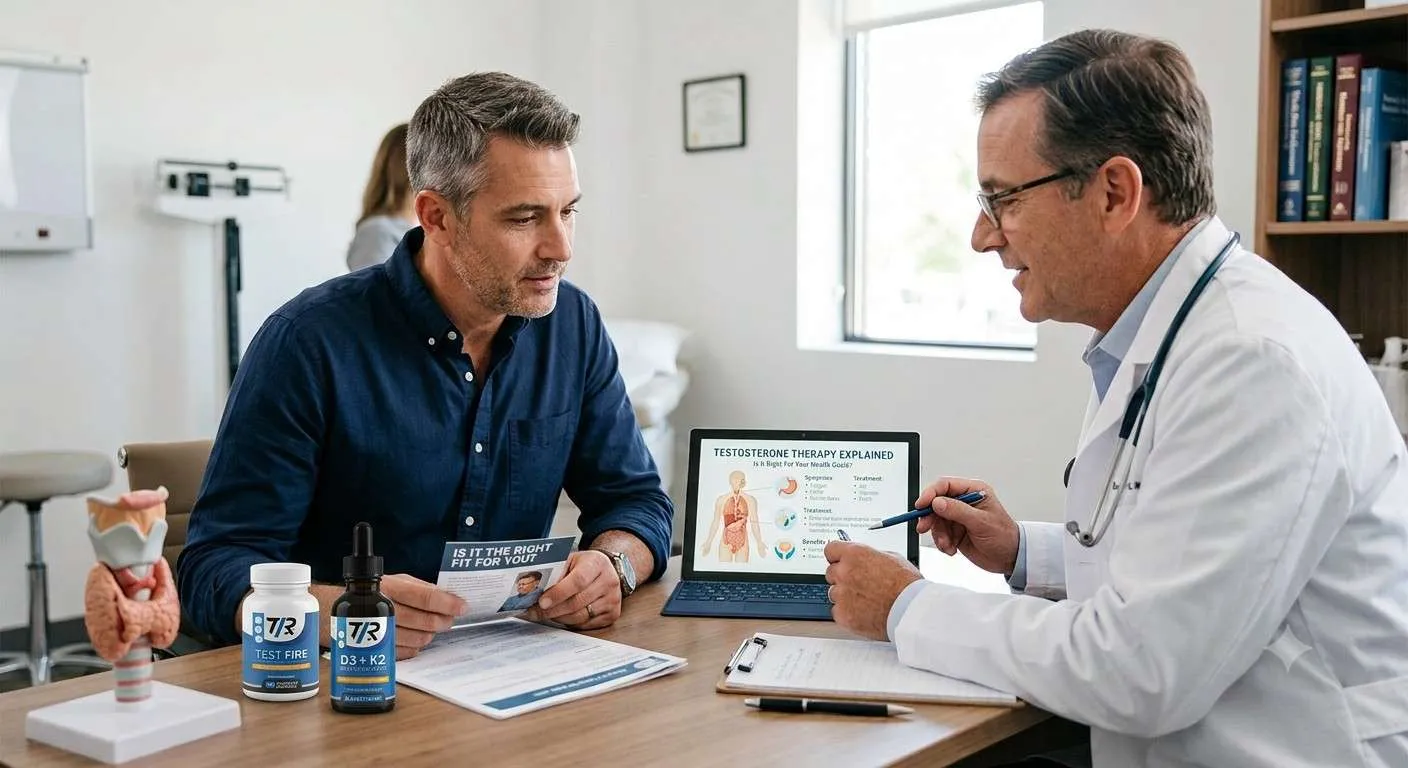
In 2019, Cleveland Clinic surveyed more than 1,100 American men about how they feel about doctor visits. Seventy-two percent said they would rather do household chores, like cleaning the bathroom or mowing the lawn, than book an appointment. One in five admitted they had held something back from a doctor at some point, and embarrassment was the reason those men gave most often. Erection problems and HIV prevention sit near the top of the list of subjects men keep to themselves, which helps explain why treatable conditions so often go unmentioned for years.
Why men wait
The numbers make all that silence look strange. Research cited by the National Institute of Diabetes and Digestive and Kidney Diseases suggests that between 30 million and 50 million men in the United States have erectile dysfunction, and about 40 percent of men are affected by age 40 (NIDDK, last reviewed October 2024). A man sitting quietly on this problem is in enormous company. It rarely feels that way from the inside.
Some of the delay is practical. Seeing a specialist can mean a referral, a weeks-long wait, and a conversation with a receptionist within earshot of a full waiting room. The rest is the story a man tells himself, usually that the problem is stress or a rough patch that will sort itself out. Sometimes that story is true. When the difficulty keeps returning over several months, it deserves a clinician's attention, partly because ED can show up alongside conditions worth catching early, including high blood pressure, diabetes, and heart disease. Any good doctor will want to check for those before writing a prescription.
What online ED care involves
Telehealth changed the shape of the first step. What once required a waiting room now starts with a private form on a phone, and for many men that difference decides whether the question gets asked at all.
The process looks similar across reputable services. Amazon One Medical, for example, structures its online erectile dysfunction treatment around a health intake that can be started at any hour, followed by a conversation with a licensed provider over secure messaging or video. If the clinician decides medication makes sense for you, the prescription goes to a pharmacy of your choice or arrives by delivery. Visits start at $39, with medication billed separately. Insurance is generally not accepted for the on-demand visit itself.
The screening is stricter than people expect. One Medical limits its ED service to men between 18 and 64 and asks for a blood pressure reading from the past 12 months. Men with a history of heart or urinary problems are directed to in-person care instead, and refills typically require a fresh consultation. A service willing to hand out sildenafil without asking any of this is a service to be wary of.
None of this makes telehealth the automatic answer. A primary care doctor can evaluate ED during a routine physical, and a urologist remains the right call for complicated cases or when pills have already failed. The online route mostly removes the waiting and the waiting room, which for plenty of men were the reasons the question never got asked.
PrEP and the question of cost
HIV prevention suffers from a different assumption, the belief that protection is expensive. The medicine itself has an unusually strong record. Taken as prescribed, both the daily pill and the injectable version of PrEP reduce the risk of getting HIV from sex by about 99 percent, according to CDC clinical guidance last reviewed in April 2026. The CDC recommends considering PrEP for people without HIV who may be exposed to it through sex, including anyone whose partner has HIV.
Money is where most of the hesitation lives. Under the Affordable Care Act, PrEP must be free under almost all health insurance plans, and that includes the lab tests and clinic visits attached to the prescription (CDC, Preventing HIV with PrEP, updated April 2026). Without coverage the range gets wide. Generic PrEP costs roughly $60 for a month's supply, while brand-name versions can climb past $2,000. Numbers like that scare people away before they find out what they would personally pay. The real answer to how much does PrEP cost depends almost entirely on your coverage. Freddie, a telehealth service built around HIV prevention, breaks the figure down by insurance situation and reports that most of its patients pay nothing once insurance and financial assistance programs are combined, with at-home lab testing and delivery included.
For men without insurance, or those who would simply rather sit across from someone, community clinics and state PrEP assistance programs cover the same ground, and the CDC's PrEP page links directly to them.
When in-person care is the right call
Online care has edges, and the better services are upfront about them. A physical appointment is the safer route when any of the following applies:
-
You cannot get an erection at all. Online ED platforms send this situation to in-person evaluation because it can point to causes a questionnaire cannot assess.
-
Erections are painful or the shape of the penis has changed. Both deserve a physical exam.
-
You take nitrates for chest pain or have known heart disease. Combining nitrates with ED medication is dangerous, and that conversation belongs in a room with your full chart.
-
You want PrEP but prefer clinic-based testing. An HIV test is required before the first prescription, and testing continues at regular intervals for as long as you take it. The injectable version also means showing up for each shot.
A long-overdue checkup belongs on the list as well. Erection trouble sometimes appears years before a heart problem makes itself known, so a man who has skipped doctors for a decade may get more from one baseline physical than from any single prescription.
The first conversation
All of these routes end with a clinician looking at your history and responding to the question you finally asked. Pick whichever door is easiest to walk through. For some men that is a quiet form on a phone at midnight. For others it is a booked appointment with the family doctor they have seen for years. Both lead to real medical care, and the person on the other side has handled this exact conversation more times than most patients would ever guess.

Reviewed by