Following a therapeutic diet for a chronic condition rarely fails because someone forgets the rules. It fails because the food meant to support that plan goes soft, wilts, or smells off before it gets eaten. Good food storage tips are often treated as a minor kitchen detail, but for anyone managing a diabetic, renal, low-sodium, or other restricted eating plan, freshness is the difference between a meal that fits the plan and a rushed substitution that does not. When batch-prepped meals or carefully chosen produce spoil early, the plan itself becomes harder to follow, not because the person lost motivation but because the ingredients simply were not there anymore. This article explains why freshness retention is central to sticking with a therapeutic diet and what helps you extend it at home, from understanding why food spoils faster under certain conditions to the storage habits and equipment characteristics that slow that process down.
Why consistent diet adherence is harder than it sounds
Sticking to a prescribed diet plan sounds like a matter of discipline, but in practice it is largely a logistics problem. Most therapeutic diets require specific combinations of ingredients prepared in specific ways, often several times a week. That means shopping trips have to be planned around what is actually needed, not just what looks appealing, and meals often need to be prepared ahead of time to fit around work, treatment schedules, or energy levels that vary day to day.
What derails this system is rarely a single dramatic lapse. It is smaller and more mundane: a vegetable that was fine on Sunday but unusable by Wednesday, or a portioned meal that develops an off smell a day earlier than expected. When that happens, the person managing the diet is left with two choices, neither of them good. They either eat something that does not fit the plan, or they skip the meal and end up hungrier later, which often leads to less careful choices. Repeated often enough, this pattern is what people describe as diet fatigue, and it has less to do with willpower than with the fact that the plan keeps getting interrupted by circumstances outside anyone's control.
Diet adherence is generally easier when planned meals and ingredients remain usable throughout the week, because it removes the pressure of last-minute decisions. When the food prepared on a shopping day is still viable by the time it is scheduled to be eaten, there is no need to improvise, and improvisation is exactly where dietary restrictions tend to break down. Understanding this connection between freshness and consistency is the first step toward addressing it directly, rather than treating every missed meal as a personal failure.
The freshness problem: why produce and prepared meals spoil before you can use them
Spoilage is not random; it follows a few predictable mechanisms that matter a great deal to anyone relying on batch-prepped food. One of the most overlooked is ethylene gas. Certain fruits and vegetables release this gas naturally as they ripen, and when they are stored close to more delicate produce, the gas accelerates ripening and decay in items that would otherwise have lasted longer. A single ripening item sitting near a bag of leafy greens can quietly shorten the usable life of the whole batch, even though nothing looks wrong at first glance.
The second mechanism is moisture loss. Standard refrigerator compartments are not designed to hold a consistent level of humidity, and leafy vegetables in particular lose water quickly to the surrounding air. Once that happens, cell structure breaks down, leaves go limp, and the nutritional and textural quality drops well before the food would be classified as spoiled outright. For someone managing a diet built around fresh vegetables, this early-stage decline matters just as much as outright rot, because a wilted, less nutrient-dense vegetable is not really delivering what the diet plan calls for.
Prepared meals face a related but distinct issue. Once food is cooked, its exposure to air and temperature fluctuation determines how quickly bacterial growth resumes after storage. A container that is opened and closed repeatedly, or one that sits in a section of the fridge with uneven cooling, will not hold up as long as one kept in stable, cold, low-airflow conditions. The combination of these mechanisms explains why a week's worth of careful meal prep can start failing by the middle of the week rather than lasting until the next shopping trip, and why simply "storing things in the fridge" is not a uniform strategy.
What extends usable freshness at home
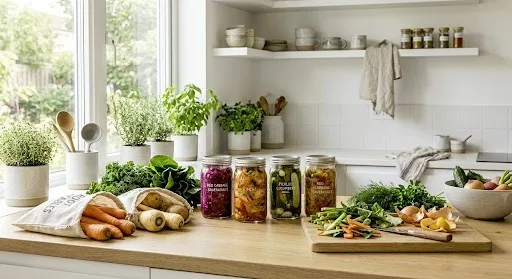
Slowing these mechanisms down comes down to controlling the two variables that drive spoilage: exposure to ethylene and other airborne compounds, and loss of moisture. Separating foods into distinct compartments with their own humidity levels addresses both problems at once. Items that release ethylene can be kept apart from those sensitive to it, and vegetables that need higher humidity can be stored differently from fruits that keep better in drier conditions. This is a straightforward extension of ordinary refrigeration, not a replacement for it, but it changes how long food stays genuinely usable rather than merely edible.
Some storage technologies go a step further by maintaining conditions close to freezing without actually freezing the food, combined with tightly controlled, low humidity levels in a dedicated section. This near-zero-degree, moisture-managed environment slows enzymatic activity and moisture loss more effectively than a standard chilled compartment, which is why certain fresh items can stay usable noticeably longer under these conditions than in a typical fridge shelf. Fully integrated fridge-freezers built with dedicated freshness zones, sometimes described as BioFresh-style compartments, are one example of this compartment-based approach, separating sensitive produce and prepared items from the rest of the fridge's airflow and temperature swings. For a kitchen built around a strict eating plan, a built in Fridge Freezer with this kind of internal separation can mean the difference between produce that holds up through a full prep cycle and produce that has to be tossed halfway through the week.
A built-in Liebherr fridge with BioFresh keeps that produce just above 0°C, so the ingredients for a restricted plan are still usable later in the week.
None of this eliminates the need for planning, but it does widen the margin for error. A vegetable that would otherwise wilt by day three might hold its texture and nutritional value several days longer under stable, humidity-controlled conditions, giving the diet plan more room to absorb a delayed shopping trip or a busier-than-expected week.
Building a freshness-first kitchen routine: practical food storage tips for your diet plan
Equipment alone does not solve the freshness problem; how food is organized inside it matters just as much. One practical habit is arranging batch-prepped containers by how soon each item needs to be used. Meals intended for the next day or two go in front, at eye level, where they are seen and used first. Items with a longer usable window go further back. This simple ordering prevents the common pattern where the newest, most convenient container gets eaten first while an older one is forgotten until it has already turned.
A second habit worth building into a weekly routine is a short freshness audit, ideally done on the same day each week, right before a new shopping or prep cycle begins. Walking through the fridge and freezer to check what is nearing the end of its usable life, and using or repurposing it before it crosses that line, catches waste before it happens rather than after. For someone on a restrictive diet, this audit also serves as a checkpoint: it reveals which foods consistently spoil too early, information that can shape which items are bought in smaller quantities or prepared differently the following week.
Extended freshness reduces the need for frequent grocery trips, which can support consistency in meal planning, since fewer emergency shopping runs mean fewer opportunities to grab something that does not fit the plan. A routine built around storage order and a regular freshness check turns food management from a reactive scramble into something closer to a predictable weekly rhythm, which is precisely what a therapeutic diet depends on to stay sustainable over months rather than days.
Frequently Asked Questions
Which foods lose quality fastest when humidity control is missing?
Leafy greens, herbs, and thin-skinned vegetables are typically the most sensitive, because their high surface-area-to-volume ratio makes them lose moisture quickly in dry air. Root vegetables and firmer produce tend to hold up longer under the same conditions, since their denser structure retains water more effectively.
Does freezing prepared meals undermine diet quality?
Freezing itself does not significantly change the nutritional composition of most cooked meals; the main risks come from how the food is frozen and reheated, such as uneven cooling before freezing or extended reheating times that affect texture. For a therapeutic diet, freezing a portioned meal is generally a reasonable way to preserve a compliant dish for later use, provided it was suitable for the diet before freezing.
What is the difference between a standard crisper drawer and a dedicated freshness compartment?
A standard crisper drawer offers limited humidity adjustment and shares airflow with the rest of the fridge, so temperature and moisture still fluctuate. A dedicated freshness compartment is typically sealed more tightly and holds a narrower, more stable range of temperature and humidity, which is why it can extend the usable life of sensitive items noticeably longer than an ordinary drawer.

Reviewed by